Adaptive Group Fitness · Port Jefferson Station, NY
Adaptive Group Fitness on Long Island
Group Energy. Individual Adaptations.
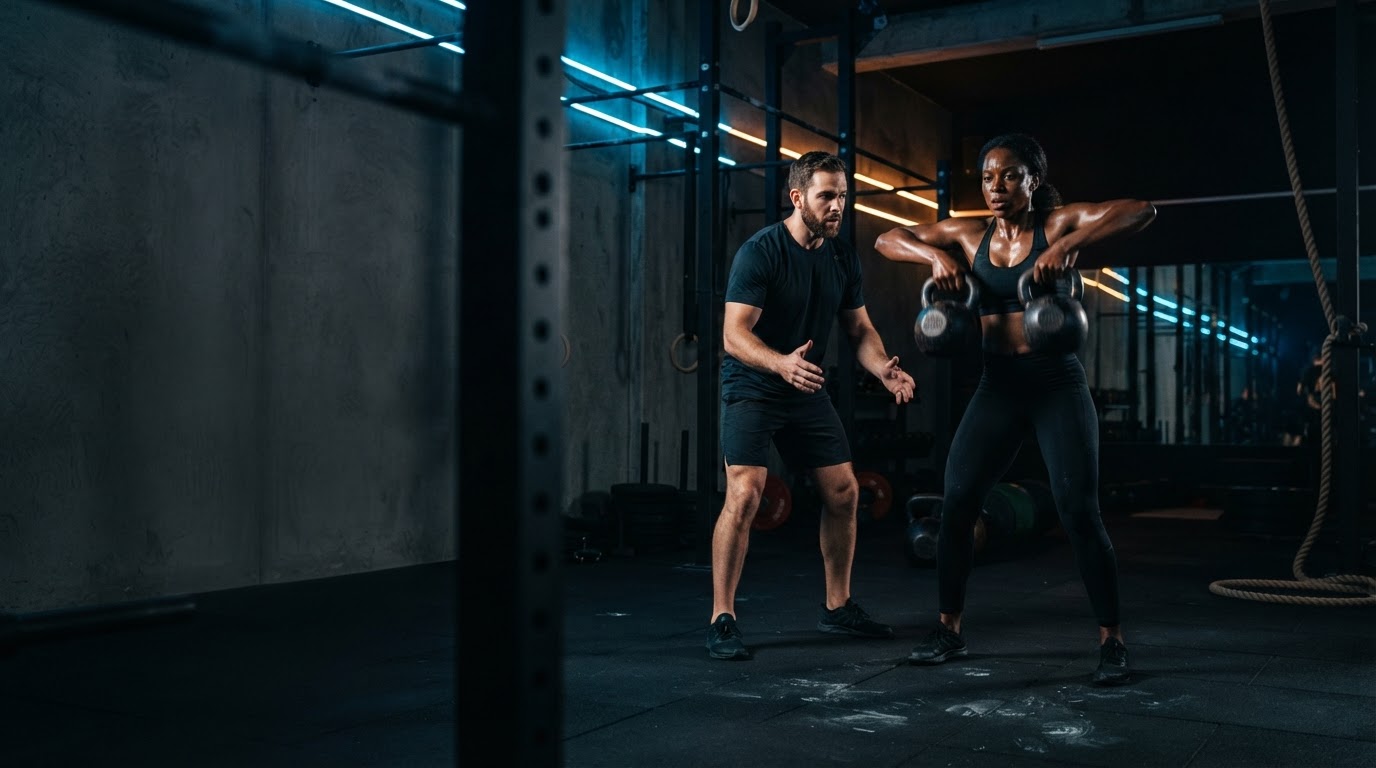
Group fitness does not have to mean every athlete doing the exact same workout in the exact same way.
Fusion Adaptive Fitness uses a flexible coaching approach so children, teens and adults can train alongside others while exercises, pacing and instruction are adjusted when needed.
The goal is to create a real fitness environment where athletes can work hard, build skills and experience the energy of training with a group.
What Makes a Fitness Class Adaptive?
An adaptive group class starts with the understanding that athletes may have different abilities, experience levels and support needs.
Instead of forcing everyone into one version of the workout, the coach can modify parts of the training while keeping the group moving together.
Exercise Modifications
Athletes may perform different versions of the same movement based on ability, mobility, balance or experience.
Flexible Pacing
Some athletes may need extra repetitions, more time to transition or a different pace than others.
Different Coaching Styles
Instructions can be demonstrated, shortened, repeated or broken into smaller steps.
Shared Fitness Experience
The group trains together while individual athletes receive the adjustments they need.
Training together does not require training identically.
Who May Enjoy Adaptive Group Fitness?
Small-group fitness may be a good fit for athletes who enjoy training around others and can participate in a shared class environment with appropriate modifications.
Kids Who Enjoy Group Energy
Some children are more motivated when they can exercise alongside peers instead of training alone.
Teens Looking for a Fitness Community
Group training can provide structure, routine and a social fitness environment without requiring participation in traditional team sports.
Adults Building a Weekly Routine
Adults may benefit from having a scheduled group activity that supports strength, fitness and consistent movement.
Autistic Athletes
Some autistic athletes enjoy predictable group routines, shared activities and clear class structure when appropriate adaptations are available.
Athletes With Developmental Disabilities
Athletes may benefit from repeated instruction, exercise modifications or additional coaching while still participating with the group.
Athletes Ready to Move Beyond One-on-One Training
Some athletes may begin with personal training and later transition into a group when they become more comfortable and independent.
What Can We Work On in Group Fitness?
The exact workout may vary, but adaptive group fitness can include areas such as:
Not every athlete needs to complete every movement in the same way.
The goal is appropriate participation and meaningful progress.
Same Class. Different Starting Points.
Imagine the group is working on a squat movement.
- One athlete may perform a bodyweight squat.
- Another may squat to a box.
- Another may use support.
- Another may work through a smaller range of motion.
The fitness goal can remain similar even though the movement looks different.
If the group is doing conditioning work, one athlete may move continuously while another uses shorter work periods and additional rest.
The coach adapts the pathway without removing the challenge.
Should We Start With Group Fitness or Personal Training?
Adaptive Group Fitness May Be a Good Fit If...
- the athlete enjoys being around others
- they can participate in a shared class structure
- they can follow group instruction with modifications
- they are comfortable with moderate activity around them
- they are ready to work with some independence
Adaptive Personal Training May Be Better to Start If...
- the athlete needs significant one-on-one attention
- new environments are difficult
- they need a slower introduction to fitness
- instructions require frequent individual repetition
- the athlete is not yet comfortable participating in a group
There is no better or worse option.
The goal is to choose the environment that gives the athlete the best chance to participate successfully.
Kids & Teens
Adaptive Group Fitness for Kids & Teens
Not every child wants to play a traditional sport.
Adaptive group fitness can give children and teens another way to:
- become more active
- build strength
- improve coordination
- develop confidence
- practice exercising around peers
- create a healthy weekly routine
The group environment should still allow room for different abilities and different rates of progress.
Adults
Adaptive Group Fitness for Adults
Adults with disabilities may have fewer fitness opportunities once school-based programs end.
A small-group fitness program can provide:
- regular physical activity
- routine
- fitness goals
- social interaction
- a real gym environment
- opportunities to build greater exercise independence
The program should remain age-appropriate and focused on adult fitness.
Autism
Group Fitness for Autistic Athletes
Some autistic athletes thrive in groups.
Others may need time before a group environment feels comfortable.
When an autistic athlete participates in group fitness, factors such as these may matter:
- predictable structure
- clear transitions
- demonstrations
- shorter instructions
- repetition
- class size
- noise level
- familiarity with the coach
- time to learn the routine
Fusion evaluates the individual athlete rather than assuming autism automatically means someone should or should not train in a group.
Developmental Disabilities
Group Fitness for Athletes With Developmental Disabilities
Small-group fitness may offer athletes with intellectual or developmental disabilities a structured way to exercise alongside others.
Coaching may be adapted through:
- demonstrations
- repeated instruction
- modified exercises
- simplified movement sequences
- additional transition time
- individual coach feedback
The right level of independence and support will differ from athlete to athlete.
Fitness Can Be Social Without Becoming a Social Program
The main purpose of Fusion Adaptive Fitness is exercise.
But training alongside other people can also create opportunities for athletes to:
- become more comfortable in a gym
- learn class routines
- practice taking turns
- encourage others
- build confidence around peers
- become part of a fitness community
We do not need to turn every exercise session into a social-skills lesson.
Often, social connection develops naturally when people train together consistently.
Train together. Progress individually.
Can a Parent, Caregiver or Support Person Attend?
Some athletes participate independently.
Others may currently attend community activities with a parent, caregiver, Community Habilitation worker or another support person.
Tell us about the athlete's current support needs when you contact us.
We can discuss what makes sense for the specific class and athlete.
Fusion does not provide Community Habilitation services.
Using OPWDD Self-Direction?
Some people using OPWDD Self-Direction may have approved funding available for qualifying fitness-related expenses.
One potential funding category is the IDGS Community Class category. However, an adaptive fitness class does not automatically qualify as an OPWDD Community Class.
For that specific funding category, OPWDD generally requires the class to be publicly available and offered in an integrated community setting to people with and without developmental disabilities.
Whether a particular Fusion class qualifies depends on how the class is structured and the participant's approved Self-Direction plan.
Fusion can provide class descriptions, pricing, schedules and business information for the participant's Support Broker and Fiscal Intermediary to review.
Fusion does not determine funding eligibility or guarantee approval.
Class Documentation
We can provide class descriptions, enrollment details, schedules and pricing for your FI to review.
Working With Your Broker
Your Support Broker can help determine whether a class fits the participant's approved Self-Direction plan.
Community Class Requirements
OPWDD's Community Class category generally requires public availability and an integrated community setting.
Looking for Something More Striking-Based?
Some athletes are especially motivated by boxing and kickboxing-style training.
Adaptive Boxing & Kickboxing can include:
- heavy bag work
- basic striking combinations
- footwork
- movement
- coordination
- conditioning
Training can be adapted around different abilities and experience levels.
Striking Fitness, Adapted
Real boxing and kickboxing fitness with bag work, combinations, footwork and conditioning adjusted around the athlete.
How Do We Know If Group Fitness Is the Right Fit?
You don't need to decide on your own.
Start by telling us about the athlete.
Helpful information includes:
- age
- previous fitness experience
- comfort in group environments
- ability to follow shared instruction
- communication preferences
- sensory considerations
- mobility
- support needs
- fitness goals
We can help determine whether group fitness, personal training or another available option appears to be the best place to start.
Adaptive Group Fitness in Port Jefferson Station
Fusion Adaptive Fitness is based in Port Jefferson Station and serves children, teens and adults from communities throughout the Town of Brookhaven and surrounding Suffolk County.
Families may travel from Port Jefferson, Mount Sinai, Miller Place, Stony Brook, East Setauket, Centereach, Selden, Coram, Sound Beach, Rocky Point, Middle Island and nearby communities.
Communities We Serve
- Port Jefferson
- Mount Sinai
- Miller Place
- Stony Brook
- East Setauket
- Centereach
- Selden
- Coram
- Sound Beach
- Rocky Point
- Middle Island
- Nearby areas
Adaptive Group Fitness FAQs
Ready to See If Group Fitness Is a Good Fit?
Tell us about the athlete, their fitness experience and how they currently do in group environments.
We'll help you determine whether Adaptive Group Fitness or another Fusion program may be the right place to begin.