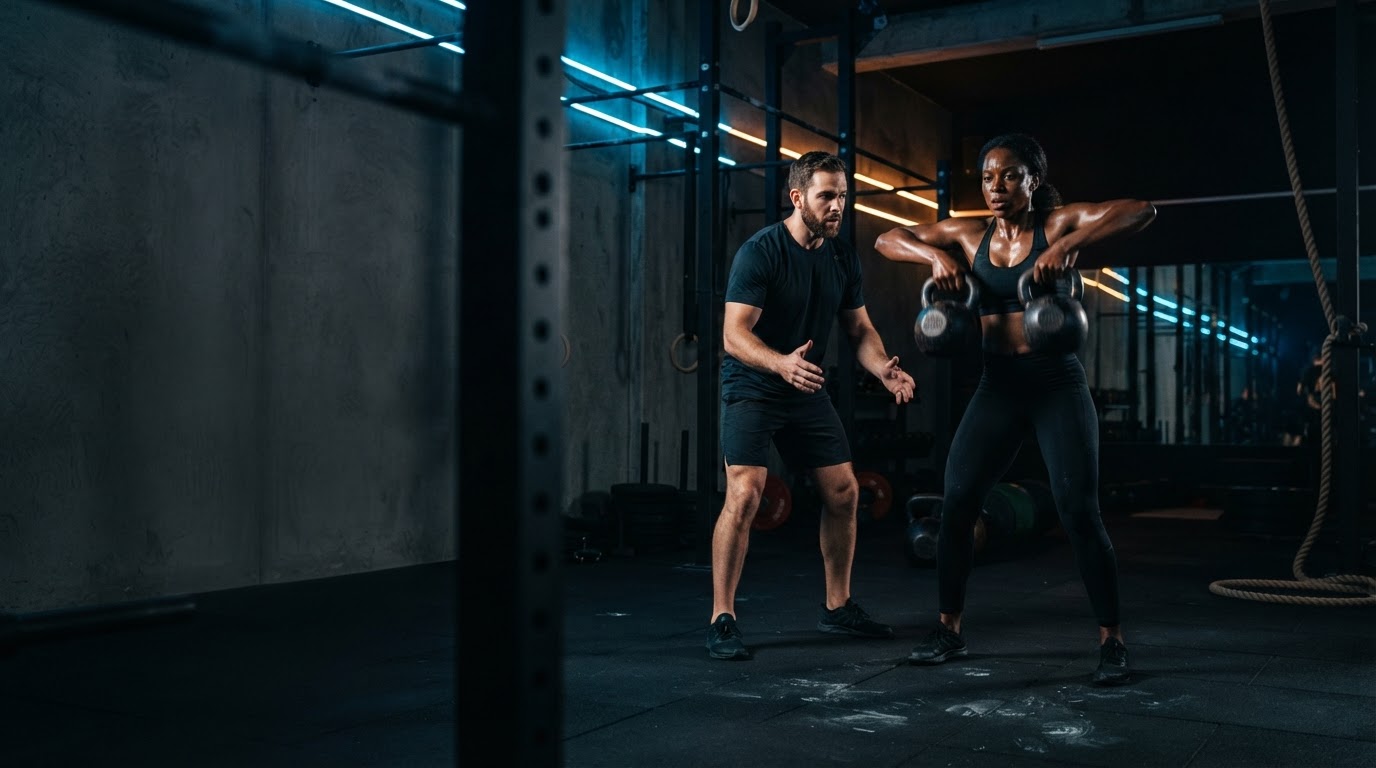
Developmental Disability Fitness · Port Jefferson Station, NY
Fitness for People With Developmental Disabilities on Long Island
Real Fitness. Individual Adaptations. Respectful Coaching.
People with developmental and intellectual disabilities can have very different abilities, fitness goals, communication styles and support needs.
Fusion Adaptive Fitness provides individual and small-group fitness that can be adjusted around the athlete instead of expecting every person to train the same way.
We focus on exercise, coaching, movement, strength, conditioning and meaningful progress.
What Does Developmental Disability Fitness Mean?
Developmental disability is a broad term.
People within this group may have very different strengths, challenges and support needs.
- Some athletes may have intellectual disabilities.
- Some may have autism.
- Some may have conditions such as Down syndrome, cerebral palsy or other developmental diagnoses.
- Others may have multiple support needs.
Fusion does not assume that two people with the same diagnosis should train the same way.
We program for the person in front of us.
How Can Fitness Be Adapted?
Exercise Selection
The coach can choose movements that better match the athlete's current abilities, mobility and goals.
Instructions
Directions can be shortened, demonstrated, repeated or broken into smaller steps.
Pacing
Some athletes may need more time to process or practice. Others may be ready to move more quickly.
Resistance & Range of Motion
Weight, resistance, exercise position and range of motion can be adjusted.
Environment
Group size, transitions, noise and activity level may affect how successfully someone participates.
Level of Support
Some athletes may need more coach attention at first and gradually become more independent over time.
What Can We Work On Through Fitness?
Training goals can be different for every athlete.
Depending on the individual, fitness may focus on:
Progress does not have to look the same for everyone.
One athlete may be working toward lifting more weight.
Another may be learning how to follow a workout routine.
Someone else may be becoming more comfortable exercising independently in a gym.
Personal Training
Adaptive Personal Training
One-on-one training can be a strong option for athletes who need:
- more individual coaching
- more repetition
- flexible pacing
- simpler progressions
- additional demonstrations
- more time to learn the environment
- closer coach attention
Adaptive Personal Training gives the coach more time to learn how the athlete moves, communicates and responds to different exercises.
Group Fitness
Adaptive Group Fitness
Some athletes enjoy training around other people and may be ready for a small-group environment.
Adaptive Group Fitness allows people to train together while the coach modifies exercises or pacing when needed.
The athlete does not need to perform every movement exactly the same way as everyone else.
Boxing & Kickboxing
Adaptive Boxing & Kickboxing
Some athletes are especially motivated by striking-based fitness.
Adaptive Boxing & Kickboxing may include:
- heavy bag work
- punches
- kicks
- simple combinations
- footwork
- movement
- conditioning
- coordination
Drills can be simplified or progressed based on the athlete's abilities and experience.
Coaching Should Match How the Athlete Learns
Some athletes learn best through verbal instruction.
Others may respond better to:
- demonstrations
- short phrases
- repetition
- gestures
- visual structure
- step-by-step coaching
- extra processing time
If the athlete already uses communication strategies that work well at home, school, work or in other community settings, tell us about them.
The goal is to coach in a way the athlete can understand.
Coach in a way the athlete can understand.
Different Bodies May Need Different Exercise Options
Athletes may have differences in:
- balance
- coordination
- muscle tone
- mobility
- endurance
- range of motion
- motor planning
- strength
That does not automatically mean they cannot participate in fitness.
It means exercise selection and progression may need to be adjusted.
Fusion will only use movements that fit within the athlete's current abilities and the scope of a fitness setting.
Fusion does not make medical or rehabilitation claims.
Adjust the exercise. Keep the focus on fitness.
Fitness for People With Intellectual Disabilities
Athletes with intellectual disabilities may benefit from fitness coaching that is:
- clear
- consistent
- repeatable
- appropriately paced
- visually demonstrated
- broken into manageable steps
At the same time, we do not assume that an intellectual disability means low expectations.
Some athletes may learn exercises quickly and become increasingly independent.
Support needs and ability are not the same thing.
What About Athletes With Down Syndrome?
People with Down syndrome can have different fitness levels, goals and support needs.
Some may benefit from changes in:
- exercise selection
- balance demands
- pacing
- resistance
- repetition
- coaching style
Fusion does not use one standard workout for all athletes with Down syndrome.
Start with a conversation so we can better understand the individual.
Fusion does not make medical claims or imply condition-specific treatment.
No standard workout. Just the athlete.
What About Cerebral Palsy or Physical Disabilities?
Some athletes may have mobility or movement differences that require more substantial exercise modifications.
Whether Fusion is the right fit depends on the individual, the facility, the equipment available and the level of support required.
We do not claim that every person with a physical disability can safely participate in every Fusion program.
Start by telling us about the athlete's mobility, current exercise experience and support needs so we can determine whether our current setup is appropriate.
Fit and safety come before making a promise.
Kids & Teens
Adaptive Fitness for Kids & Teens With Developmental Disabilities
Children and teens may benefit from a fitness environment that gives them more flexibility than traditional sports or large classes.
Training may focus on:
- strength
- coordination
- balance
- fitness confidence
- exercise routine
- learning new movements
- becoming more comfortable in the gym
Adults
Adaptive Fitness for Adults With Developmental Disabilities
Adults should have access to age-appropriate fitness.
Training may focus on:
- strength
- conditioning
- routine
- confidence
- independence
- gym skills
- becoming more active
- participating in a fitness community
Adult adaptive fitness should not feel like children's programming.
Can a Caregiver or Support Person Attend?
That depends on the athlete and program.
Some athletes train independently.
Others may currently attend activities with:
- a parent
- caregiver
- Community Habilitation worker
- direct support professional
- other support person
Tell us about the athlete's current support arrangement.
We can discuss what is appropriate for the gym and program.
Fusion does not provide Community Habilitation.
Tell us about the athlete's current support arrangement.
We can discuss what level of involvement makes sense for the athlete and the specific program.
Independence Can Look Different for Every Athlete
For some athletes, progress may include becoming more independent with parts of the fitness routine.
That might mean:
- entering the gym more comfortably
- remembering familiar exercises
- moving between stations
- setting up simple equipment
- completing parts of a workout with fewer prompts
- asking for help when needed
Not every athlete has the same independence goals.
The goal should reflect the individual.
Independence goals should reflect the individual.
Fusion Provides
- exercise
- coaching
- strength training
- conditioning
- movement
- fitness skill development
Fusion Does Not Provide
- Day Habilitation
- Community Habilitation
- ABA
- physical therapy
- occupational therapy
- medical rehabilitation
An athlete may attend Fusion with their own support person where appropriate, but Fusion's role remains fitness.
Using OPWDD Self-Direction?
Many people with developmental disabilities use OPWDD Self-Direction.
Some participants may have qualifying fitness expenses included within an approved Self-Direction budget.
Depending on the participant's plan and applicable funding category, qualifying expenses may include certain fitness memberships, community exercise classes or individual exercise training.
Fusion can provide:
- program descriptions
- pricing
- business information
- invoices
- reasonable supporting documentation
for the participant's Support Broker and Fiscal Intermediary to review.
Fusion does not determine OPWDD eligibility or guarantee funding.
Program Documentation
We can provide program descriptions, pricing and business information for your FI to review.
Working With Your Broker
Your Support Broker can help determine how fitness fits the participant's approved Self-Direction plan.
No Eligibility Guarantee
Fusion does not determine OPWDD eligibility or guarantee that a particular service will be funded.
We Don't Assume Every Program Is Right for Every Athlete
Adaptive fitness still needs to be safe and appropriate.
Before getting started, we want to understand things such as:
- age
- current activity level
- mobility
- communication
- balance
- exercise experience
- sensory considerations
- support needs
- fitness goals
- comfort in group environments
If our current program or facility is not an appropriate fit, we should be honest about that.
“All abilities” means we work to adapt where we safely can. It does not mean every program fits every person.
Developmental Disability Fitness in Port Jefferson Station
Fusion Adaptive Fitness is based in Port Jefferson Station, NY and serves children, teens and adults from communities throughout the Town of Brookhaven and surrounding Suffolk County.
Families and athletes may travel from Port Jefferson, Mount Sinai, Miller Place, Stony Brook, East Setauket, Centereach, Selden, Coram, Sound Beach, Rocky Point, Middle Island and nearby communities.
Because adult and pediatric adaptive fitness options can be difficult to find, the right program may be worth traveling beyond the immediate town for.
Communities We Serve
- Port Jefferson
- Mount Sinai
- Miller Place
- Stony Brook
- East Setauket
- Centereach
- Selden
- Coram
- Sound Beach
- Rocky Point
- Middle Island
- Nearby communities
Developmental Disability Fitness FAQs
Start With the Person, Not the Diagnosis
Tell us about the athlete's age, goals, fitness experience, communication, mobility and current support needs.
We'll help determine whether one of Fusion's adaptive fitness programs may be an appropriate place to start.